
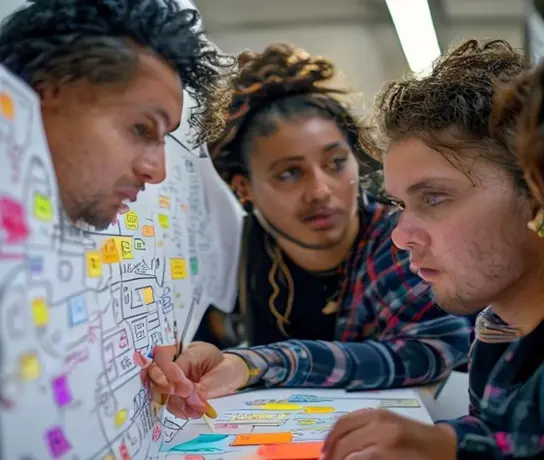
Who exactly are creative people? They are individuals characterized by a distinct capacity to generate novel and valuable ideas, solutions, or expressions across various domains. This innate drive fuels innovation, problem-solving, and societal advancement across every industry.
Understanding the essence of creative individuals goes beyond artistic talent. It involves appreciating a unique cognitive and psychological profile that allows them to perceive connections others miss and conceptualize possibilities where conventional thought sees only limits.
Understanding the Core Traits of Creative People
The hallmark of truly creative individuals lies in a blend of intrinsic characteristics and developed skills. These traits often manifest early and, when nurtured, lead to profound impact.
Psychological research consistently highlights divergent thinking as a primary cognitive process. This allows creative people to explore multiple solutions for a problem, rather than just the most obvious one. It’s about generating a wide array of possibilities.
Beyond divergent thought, a deep curiosity drives exploration. They question assumptions, delve into unknowns, and often possess an insatiable desire for learning. This curiosity isn’t passive; it’s an active pursuit of understanding.
Resilience is another critical trait. The path of innovation is rarely smooth, fraught with setbacks and failures. Creative people demonstrate remarkable persistence, viewing obstacles as learning opportunities rather than insurmountable barriers.
Cultivating Environments for Creative People
While some traits are inherent, the environment plays a crucial role in fostering and sustaining creativity. Educational institutions and workplaces must consciously design spaces and cultures that allow creative potential to flourish.
Psychological safety is paramount. Individuals must feel secure enough to propose unconventional ideas without fear of ridicule or harsh criticism. This freedom to experiment and fail openly is a cornerstone of innovation.
Providing opportunities for interdisciplinary collaboration also accelerates creative output. When diverse perspectives converge, novel connections often emerge, leading to breakthroughs that isolated efforts might miss. Cross-pollination of ideas is essential.
As reported by leading educational think tanks, structured freedom, where individuals have autonomy within broad guidelines, consistently yields higher creative engagement than rigid, micromanaged frameworks. This balance empowers individuals while providing direction.
| Creative Trait | Impact on Innovation | Nurturing Strategy |
|---|---|---|
| Divergent Thinking | Generates multiple unique solutions | Brainstorming sessions, ‘what-if’ scenarios |
| Curiosity | Drives exploration and problem identification | Open-ended projects, access to diverse resources |
| Resilience | Overcomes setbacks, sustains effort | Constructive feedback, celebrating learning from failure |
| Cognitive Flexibility | Adapts to new information, shifts perspectives | Exposure to different fields, diverse team projects |
A common misconception posits that creativity belongs exclusively to artists or eccentric personalities. This view is outdated and limits our understanding. Truly, creative people are found in every field, from scientific research to strategic business development, applying divergent thinking to complex problems.
The American Psychological Association’s literature often emphasizes that creativity is a learnable and cultivable skill, not just a genetic lottery. Educational methodologies, therefore, should prioritize critical thinking, problem-solving, and imaginative play from early stages.
- Encourage Risk-Taking: Create a culture where experimentation is valued, and mistakes are seen as learning opportunities.
- Foster Autonomy: Provide individuals with choice and control over their projects and methods.
- Promote Diverse Input: Expose individuals to varied ideas, cultures, and disciplines to broaden perspectives.
- Allocate Unstructured Time: Allow for periods of reflection, ideation, and spontaneous collaboration.
- Provide Constructive Feedback: Offer guidance that supports growth without stifling originality.
Expert Insight: The Collaborative Canvas. A persistent myth surrounding creative people is the ‘lone genius’ trope. While individual insight is valuable, significant breakthroughs rarely occur in a vacuum. My experience across educational and corporate innovation ecosystems reveals that the most impactful creativity emerges from collaborative environments that foster psychological safety and diverse perspectives. A single individual might spark an idea, but a team, through iterative feedback and constructive challenge, refines it into a groundbreaking solution. Dismissing collaboration as ‘diluting’ creativity misses its true potential as an amplifying force.
Economic reports from organizations like the World Economic Forum frequently cite creativity and innovation as paramount drivers of future global prosperity. Investing in the development of creative people is, therefore, not merely an educational ideal but an economic imperative for nations and enterprises seeking sustained growth and competitive advantage.
The imperative to understand, identify, and nurture creative people has never been greater. By cultivating supportive environments and appreciating their unique contributions, we empower individuals to unlock groundbreaking solutions and propel progress across all human endeavors. Their impact shapes industries, solves complex societal challenges, and enriches human experience globally.




More Stories
Your Ultimate Guide to Mastering Skills Based Jobs
The Ultimate Guide to Powerful Occupational Training for Modern Families
How Much Is Vocational School? Discover the Remarkable Value Behind Modern Vocational Education