
This guide treats occupational training as a set of everyday decisions rather than a single trick to memorise.
Students stand at the intersection of hope and uncertainty, searching for a path that feels meaningful, practical, and empowering.Not as a fallback. Not as a second choice. But as a strategic, uplifting, and future-proof direction that modern families are increasingly embracing.

Why Families Are Re-Evaluating the Path to Success
Attention begins with a simple truth: the world no longer rewards passive preparation. It rewards capability. Adaptability. Real-world competence.
For decades, many families believed the only respectable path forward was a traditional academic degree. Yet today, industries are shifting at a tempo that feels almost volatile. Technological revolutions, global workflow changes, and skill-driven hiring systems have created a landscape where practical expertise is no longer optional—it is essential.Modern employers increasingly prefer the second type.
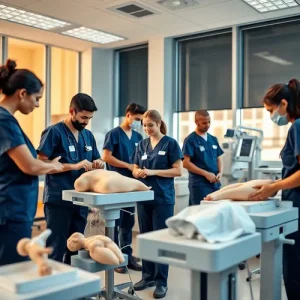
Families who recognize this shift are not lowering expectations—they are elevating them.Imagine a student who once felt lost in lengthy textbooks and rigid academic structures suddenly discovering confidence through hands-on creation—wiring circuits, designing prototypes, mastering software, repairing engines, preparing culinary masterpieces, or performing precise healthcare procedures.
This transformation is not hypothetical. It is visible across thousands of training centers, institutes, and technical academies worldwide. Learners who struggled in traditional environments often flourish when given tactile, skill-oriented pathways. Their attention sharpens. Their curiosity awakens. Their sense of personal value expands.
Families also find reassurance in the clarity these programs offer. While many academic routes lead to years of uncertainty—What job will this degree lead to? Which industries even need this major?—occupational training is deliberately structured with direct career outcomes. Students know what they are preparing for. They know why their skills matter. And they can visualize their future with far greater precision.
It is this clarity that encourages parents and students alike to explore what lies beyond the conventional.
The Extraordinary Value of Occupational Training for Long-Term Family Success
Desire strengthens once the full breadth of benefits comes into focus. Occupational training is not merely career preparation—it is life preparation. It instills discipline, professional etiquette, technical fluency, and problem-solving abilities that serve learners well beyond the workplace.
Consider a comparison:
Traditional Pathway
Years of general coursework
Limited exposure to industry settings
Higher educational costs
No guarantee of relevant skills
Graduates often require additional training
Occupational Training Pathway
Targeted, skill-specific curriculum
Direct industry involvement
Accelerated timelines
Lower overall expenses
Graduates ready for immediate employment
Higher job placement rates in many fields
For families facing financial challenges, the cost-efficiency alone offers significant relief. For ambitious learners, the speed and precision of specialized training become a launching pad. And for parents who simply want their children to step into adulthood with confidence, occupational training becomes a source of genuine reassurance.
Moreover, industries increasingly value demonstrable proficiency. In fields like healthcare, automotive technology, digital media, cybersecurity, construction, hospitality, and renewable energy, employers often favor candidates who possess practical expertise over theoretical depth. Occupational training equips learners with precisely this pragmatic strength.
Why Occupational Training Builds Resilience, Confidence, and Real Prospects
The emotional resonance behind occupational training is deeply human. Families crave not just stability, but dignity—knowing their children will thrive, contribute, and flourish. There is something profoundly uplifting about seeing a young person master a craft, innovate with their hands, or perform a skill with precision. In these moments, self-doubt dissolves. Identity sharpens. Purpose crystallizes.
And this is where occupational training stands apart. It allows students to experience achievement early and consistently. Every task completed, every technique mastered, every tool understood becomes a stepping stone toward a stronger sense of self.
This constant reinforcement develops a trait too often overlooked in education: resilience. Students learn to face challenges with competence rather than fear, because they have already trained in environments where mistakes are part of progress, not failure.
Families often describe it as watching their child “come alive.”
Opening the Door to a Future Rich with Possibilities
Action is not about pressure—it is about possibility. The journey toward occupational training begins with a decision to explore, understand, and envision a fresh direction that aligns with real-world demands and personal aspirations.
For many families, this means:
Visiting nearby technical centers or trade schools
Studying program offerings in fields of interest
Comparing training durations, learning styles, and industry partnerships
Speaking with graduates who have transformed their lives through skill-based education
Encouraging open dialogue with children about strengths, passions, and goals
The first step can feel small, but its impact is enormous. When families choose to explore occupational training, they unlock a path paved with clarity, opportunity, and empowerment. They open the door to careers that are not only stable but fulfilling. They give their children the gift of capability—a gift that continues paying dividends throughout life.
A New Era of Education: Hope, Strength, and Purpose
The world is shifting, and families who adapt with wisdom and courage will shape the future in ways that feel both purposeful and profound. Occupational training is no longer a quiet corner in the educational landscape—it is a vibrant, powerful movement redefining success for a new generation.
The promise it holds is simple yet extraordinary:
A future where every learner can grow through meaningful experience.
A future where skills lead to opportunity.
A future where families feel confident guiding their children toward paths that genuinely transform their lives.
This guide is only the beginning. The journey toward powerful, life-affirming occupational training starts now—one informed decision, one hopeful conversation, one open door at a time.
Related guides: medical assistant career path and career training academy options. For official outlook data, see Bureau of Labor Statistics Occupational Outlook.
What is occupational training?
Occupational Training is a practical path that teaches job-ready skills through hands-on classes and short programs. It helps learners qualify for work faster than long degrees.
Who should choose occupational training?
Career changers, high-school graduates, and adults seeking stable jobs benefit most. It fits those who want clear costs, timelines, and employer-recognized certificates.
How long does occupational training take?
Most programs take a few months to two years. Timelines vary by school and certificate, so compare catalogs and check graduation and job placement rates.


A simple step-by-step approach
Start with the basics of Occupational Training and keep the first step small enough to finish in one sitting. Gather the information you need, compare two or three realistic options, and note the trade-offs in plain language rather than marketing terms.
Then test the decision on a small scale before you scale it up. This is the part most people skip, and it is the reason Occupational Training sometimes feels harder than it should. A short trial tells you more than another hour of reading, and it usually surfaces the one constraint that matters in your case.




More Stories
Your Ultimate Guide to Mastering Skills Based Jobs
Creative People: The Definitive 8-Step Guide
Vocational School Costs Explained Clearly